
It’s Not the Dishes. It’s Never Really the Dishes.

You’ve had this fight before. Maybe it starts with the dishes, the calendar, or a tone of voice. Maybe it’s with your partner, or with a teenager who rolls their eyes before you’ve finished the sentence. But somewhere underneath, everyone knows it isn’t really about any of that. It’s the same argument it always is, just wearing tonight’s clothes.
Most of us are shockingly good at this. You can get all the way to the end of an argument, exhausted, without anyone naming what it was about. A few days later, it’s back, in a slightly different disguise.
Why Relationships Matter So Much
The quality of our relationships is one of the strongest predictors of happiness, resilience, and overall mental health. Decades of research point to the same thing: feeling safe and connected with the people closest to us shapes how satisfied we are with life. When those relationships feel secure, we adapt and grow. When they don’t, everything else gets harder.
That’s true at every stage. It might be a young couple learning how to be a team, parents navigating a hard stretch with a teenager, or a family adjusting to the quiet after a child leaves for college.
Most couples and families give themselves time to work through problems on their own. But sometimes that time stretches longer than they realize. By the time they walk into counseling, many aren’t looking for tools so much as bracing for a verdict. The relationship can often be repaired. But that time costs something, and it doesn’t have to.
Why The Same Fight Keeps Coming Back
Most recurring conflicts aren’t really about the topic. Underneath is almost always a deeper question: Do I matter to you? Can I count on you? Do you still choose me?
When one partner snaps about the sink, the message underneath is often “I feel like I’m carrying this alone.” When the other gets defensive, it’s often “I can never get it right with you.” Two people end up fighting the surface battle while the real conversation goes unspoken.
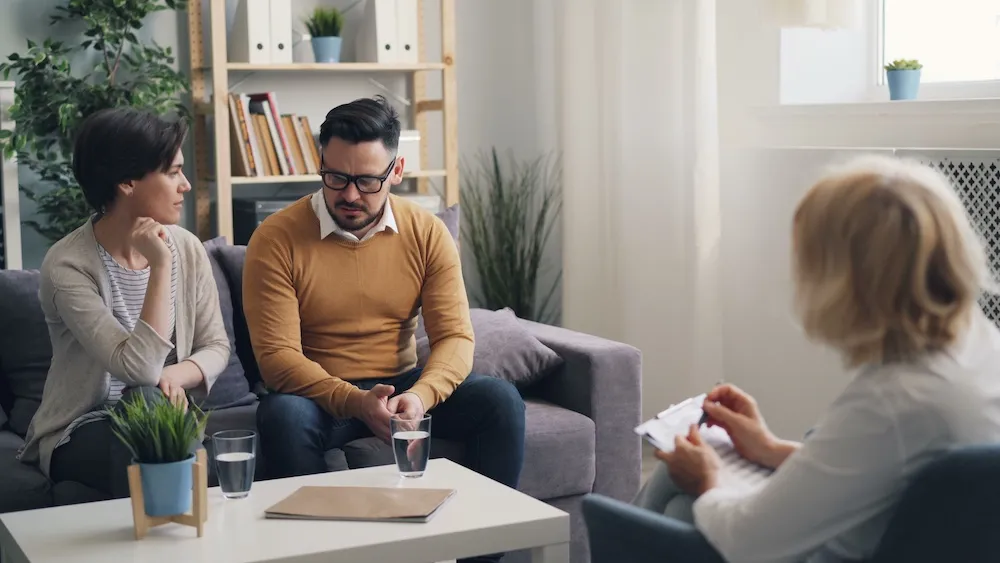
When a couple or family first comes in, it’s common for everyone to arrive with their own version of the story. Our role isn’t to take sides. We’re there for the relationship itself, making sure each person feels heard and no one leaves feeling ganged up on. The biggest shift often comes when people stop arguing about who’s right and start understanding what the other person needs. That’s when real change becomes possible.
Relationship Skills Can Be Learned
Some people come by communication and connection more naturally, thanks to personality or temperament. But relating well to others is ultimately a skill, and like any skill, it can be learned.
A few places to start:
Listen to understand, not to reply. Before you counter, try saying back what the other person means. It changes the temperature fast.
Watch how you start hard conversations. How a conversation begins tends to predict how it ends. “I’ve been feeling distant, and I miss you” opens a different door than “You never make time for me.”
Repair quickly. Every couple and every family fights. The ones who do well reach back for each other afterward, with a joke, a hug, or an honest “that got away from me, I’m sorry.”
What Couples And Family Counseling Looks Like
Good relationship therapy isn’t about assigning blame or rehashing every old grievance. Many of our therapists see a couple or family as a connected system, where each person’s thoughts, feelings, and actions ripple out to everyone else. So instead of focusing on one “problem” person, we help you notice the patterns between you, the dance you know by heart, and learn new steps together. We slow down the moments where things usually spin out, improve how you communicate, and rebuild the trust and safety that hold you together.
We offer couples counseling, family therapy, and premarital counseling, for concerns like recurring conflict, worries about divorce, infidelity, parenting struggles, blended family transitions, or a major life change. Sometimes it’s simply wanting to grow more intentional and connected. The skills you build help with what’s hard right now and lay a foundation for long-term resilience. You don’t have to be in crisis to start.
At Intown Counseling & Wellness, our couples and family counseling in Buckhead helps partners, parents, and families stop having the same fight and start actually hearing each other, in person or online across Georgia. Call (404) 478-9890 or request an appointment.