
Does Online Therapy Actually Work?

You want to talk to someone. But the idea of sitting in a waiting room, fighting Atlanta traffic after work, lining up childcare, or carving an extra hour out of an already packed day is enough to make you put it off another month.
So you start looking into online therapy. And close behind the curiosity comes the doubt. Can it really work through a screen? Isn’t it a thinner, watered-down version of the real thing, therapy with the important parts missing?
Fair questions. Here’s the honest answer.
For most people, and most of the concerns that bring them to therapy, online sessions work about as well as sitting in the same room. That’s not wishful thinking. It’s what study after study has found, across anxiety, depression, trauma, and more. What actually makes therapy work is the relationship between you and your therapist and the effort you put in together, and both of those travel through a screen far better than people expect.
Why It Works Better Than It Sounds Like It Should
So much of what heals in therapy comes down to two people paying each other close, uninterrupted attention. Over video, that attention survives more intact than skeptics expect. You can still read a face, catch the small break in a voice, and sit together inside a difficult moment without rushing it. The nervous system doesn’t need a shared floor to feel accompanied. It needs to be genuinely seen.
For some people, video actually makes it easier to open up. There’s no waiting room, no drive home with your thoughts still racing, and no chance of running into someone you know on the way out.
Where Online Really Shines
Online therapy is a good fit if:
- Your schedule is tight, and a commute is the thing standing between you and getting help.
- You live somewhere without many therapists nearby, or without one who fits what you need.
- Getting out of the house is hard, whether because of anxiety, health, or small kids at home.
Before 2020, I did maybe three or four phone sessions a year, only when something unexpected came up, like a flat tire, a client feeling under the weather, or a bad storm. Then COVID hit, and almost overnight I was seeing everyone over HIPAA-compliant video. What surprised me was how little difference I felt. In a hard time for all of us, it gave us a way to keep going. And the world changed, too. Work meetings and doctor visits moved onto screens, and connecting this way now feels ordinary for many of us. Over time I noticed advantages I hadn’t expected. People were in their own comfortable spaces, maybe with a blanket or a pet nearby, and they often talked about hard things with more ease. Now, people who mostly come in person tell me the occasional virtual session has its own benefits. It works the other way, too. Some clients who meet almost entirely online come into the office now and then, on a day off or during an especially hard stretch and tell me how much it meant to be in the room.
When In-Person May Be The Better Call
Online isn’t right for everyone, every time. If you’re in crisis or dealing with thoughts of harming yourself, a higher level of in-person care is usually safer. Some kinds of work, and some people, simply feel better face to face. And you’ll want a private, steady internet connection, which isn’t a given for everyone.
If you’re not sure which fits, that’s a fine thing to sort out in a first conversation. With a local practice, you don’t have to choose once and for all. You can stay entirely online or come see us in our Buckhead, Atlanta office whenever it feels right. Many clients do a mix of both.
What A Session Actually Looks Like
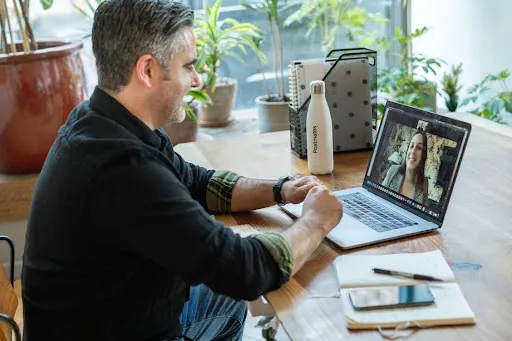
It’s simpler than you might think. Before your appointment, you’ll receive a private link to our HIPAA-compliant video platform. At your appointment time, just click the link and your therapist will appear, much like the beginning of an in-person session. All you really need is a quiet, private place where you feel comfortable talking and won’t be overheard. A home office, bedroom, guest room, or parked car can all work. The goal is simply to find a space where you can speak freely and settle in for the session.
At Intown Counseling & Wellness, our online therapy is available to clients across Georgia, with the same therapists who see people in our Buckhead office. If you’ve been putting off getting help because life is full, this may be the thing that finally fits. Call (404) 478-9890 or request an appointment.
If you’re in crisis or thinking about harming yourself, call or text 988, or call 911 in an emergency. Here in Georgia, you can also reach the Georgia Crisis & Access Line at 1-800-715-4225 or Ridgeview Institute’s Access Center at 770-434-4567.